Where Faith Meets the Body: Amulets and the Material Language of Protection
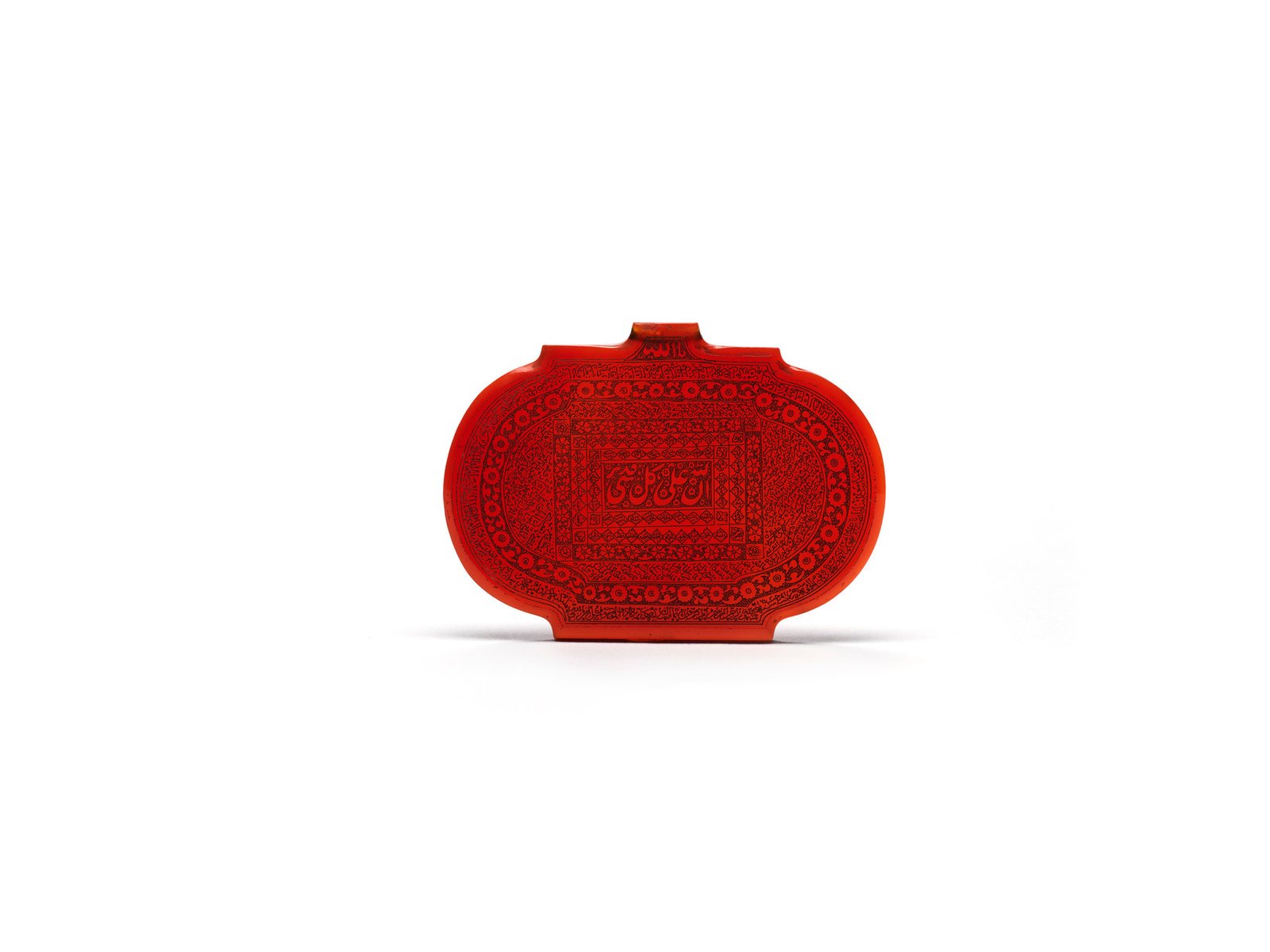
Carnelian Amulet From Iran, 1748. Collection Walters Art Museum. Source: https://art.thewalters.org/object/42.1205/
As a child at my grandmother’s house in Palestine, older women would come to visit, and I remember noticing the necklaces they wore; gold pendants bearing the name of God, or wearing small cases containing verses from the Qur’an. The gold was intensely yellow, almost glowing against their skin. At the time, these images felt distant to me carrying meanings I was too young to understand. What began as a curiosity about jewelry practices in different cultures slowly led me to something deeper: the unseen world of Amulets that people carry with them on their bodies, sometimes shaped in metal, with words written on them.
It was only later, as I grew older and began to study jewelry more closely, that I started to understand that the objects we wear are rarely only decorative. They hold stories, beliefs, and many times, desires for protection.
I encountered a remarkable archive of amulets belonging to Tawfiq Canaan1. The Palestinian doctor and folklorist developed a deep interest in Palestinian traditions and everyday spiritual practices. Through his research, he collected and documented numerous amulets and talismans used across Palestinian communities. His collection provides an important glimpse into how belief, craft, and daily life intersected through objects worn on the body.
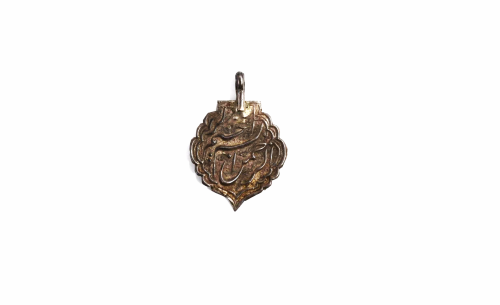
From Tawfiq Canaan’s amulets collection2. Source: https://museum.birzeit.edu/collections/tawfiq-canaan-amulets
Amulets (Hirz –حرز)are objects believed to carry protective powers, and nearly every culture has developed its own forms of such objects. In Muslim societies, amulets and talismans often bear Qur’anic inscriptions, as well as symbolic images of prophets, or religious narratives. Many Muslims believe that objects inscribed with the name of God (Allah) or with verses from the Qur’an possess the power to protect those who read, touch, or carry them, warding off harm and evil and ill health. The surfaces of these amulets may be covered with prayers, or decorative motifs, which are typically carried in pockets, rolled and placed inside small amulet cases, or worn close to the body.
This practice has a long history within Islamic traditions; some of the earliest surviving examples date back to the eleventh century and include talismanic scrolls inscribed with Qur’anic verses believed to hold protective and healing qualities3. Throughout the medieval Islamic world, talismanic scrolls, inscribed metals, and amulet cases circulated widely across regions from North Africa to the Levant, demonstrating how protective objects formed part of everyday religious life.
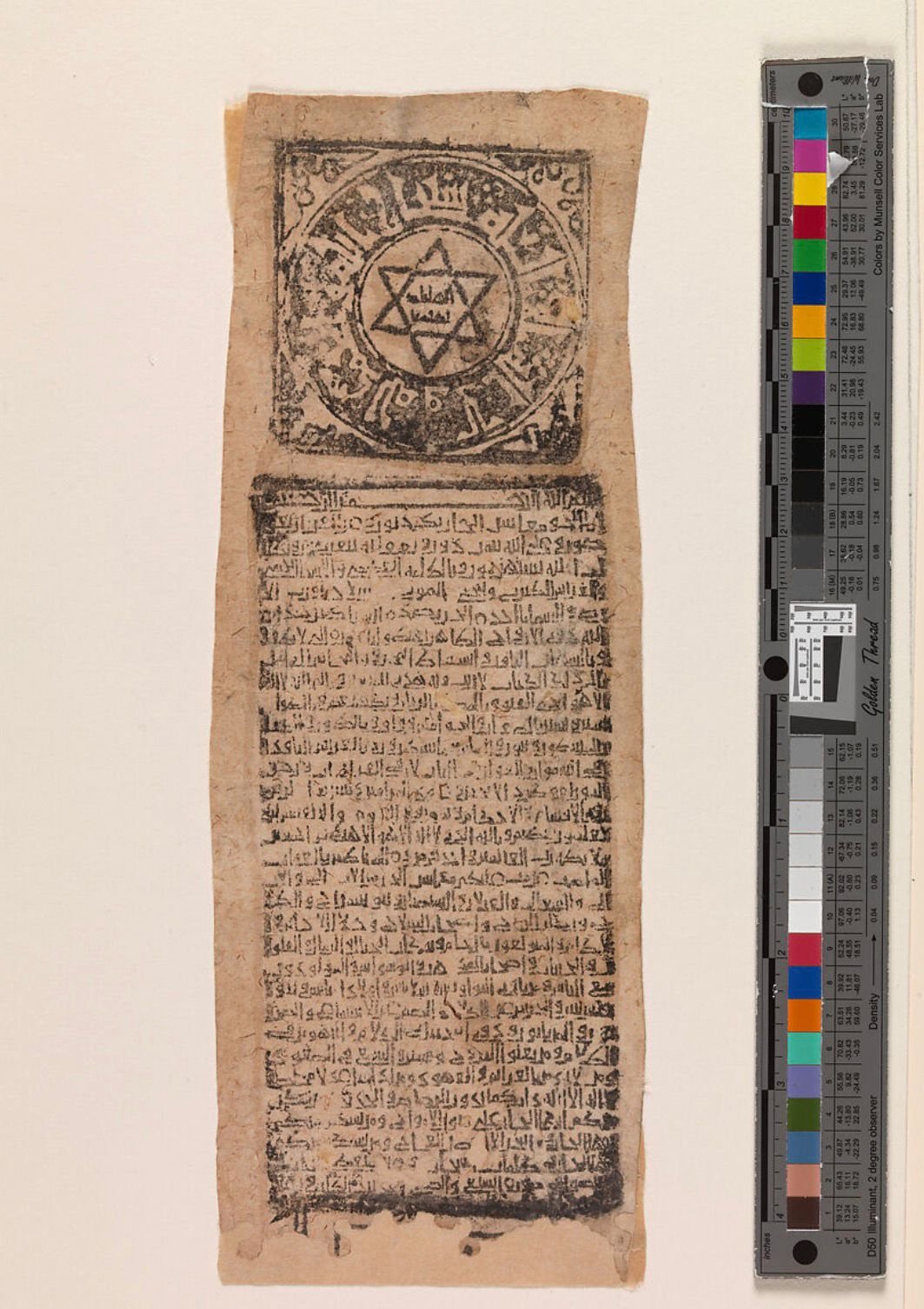
Talismanic Scroll,11th century,The Met museum.
The techniques used in the making of these amulets reveal extraordinary skill. Granulation (ḥabiyāt – حبيات), for example, consists of tiny, perfectly formed metal spheres carefully arranged and fused together on a surface. Filigree, on the other hand, is created by twisting and braiding extremely thin silver wires to form intricate patterns. These delicate techniques require great mastery, and the jewelers who practiced them were highly skilled artisans. Many pieces also feature engraved ornamentation (naqsh – نقش), further demonstrating the precision and artistry involved in their making.
Yet beyond the craftsmanship, I became increasingly interested in the meanings of these objects that people carried. Amulets and talismanic jewelry form a tangible bridge between the visible world and the unseen presence of God. They are prayers that can be held, touched, and worn. In moments of uncertainty or fear, they become objects through which individuals seek protection and reassurance and that is what I saw as a common thread that bound people near me.
Across different regions of the Islamic world, these practices take on distinct visual forms. Amulets produced in Saudi Arabia or Yemen differ in style and materials from those made in Egypt or Palestine. Variations appear not only in techniques and decorative colors but also in the forms of Arabic calligraphy used in inscriptions. Scripts such as Kufic (كوفي), Thuluth (ثلث), or Persian influenced styles give each region its own visual language while expressing similar spiritual intentions.
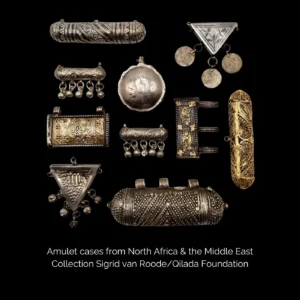
Source: https://bedouinsilver.com/how-do-amulet-cases-open/
Beyond the object itself, the body becomes an essential part of the amulet’s meaning. In many Muslim traditions, protection is not only written in words or shaped in metal but worn directly on the body around the neck, against the chest, or hidden close to the skin. The physical closeness between the object and the body is believed to activate its protective qualities. Through this intimate contact, the amulet becomes part of the wearer’s daily life, transforming jewelry into a medium through which protection and devotion are embodied. This is knowledge passed down by our elders through oral histories preserved in many of our homes.
These practices also reflect a broader social structure. To wear such an object, one had to obtain it often through family support and visit a jeweler who played an important role in shaping the final piece. The jeweler was not simply a craftsperson but a mediator who translated belief into material form. Through engraving, design, and the careful selection of Qur’anic verses or suras, the jeweler helped transform faith into a physical object meant to accompany the wearer’s body.
Each inscription carried its own significance. Certain verses were believed to provide protection from illness, misfortune, or unseen forces, while others were associated with blessing, guidance, or healing. Historically, these practices contributed to a shared cultural identity within many communities. Amulets were not unusual or hidden objects; they were visible parts of everyday life. Their presence on the body reflected a collective belief system in which faith, protection, and material culture were deeply intertwined.
Today, however, these practices appear to be gradually disappearing. We encounter such objects less frequently, and the visual presence of amulets on the body has diminished. This disappearance raises important questions. What happens when practices once embedded in everyday life begin to fade? What replaces them? And how does the relationship between the body, belief, and protection change over time? Rather than offering definitive answers, this reflection invites us to reconsider these practices and the cultural meanings they once carried. Looking back at these objects and the traditions surrounding them may allow us to better understand how faith was once expressed through the body and how material objects helped shape that relationship.
Footnotes:
- https://museum.birzeit.edu/events/palestinian-archive-healing-and-protection-legacies-tawfiq-canaan
- Silver Mâskeh stamped (with) بسم الرحمن الرحيم (In the name of (God) the most gracious, the most merciful). Jerusalem 1913
- https://www.metmuseum.org/essays/amulets-and-talismans-from-the-islamic-world
(The views expressed in this article are the author’s own. Content can be used with due credit to the author and to ‘Zariya: Women’s Alliance for Dignity and Equality’)
About the Author

Mai Zarkawi is a Palestinian jewelry designer and researcher whose practice explores adornment as a form of storytelling, memory, and cultural preservation. Her work investigates the relationship between jewelry, oral history, and lived experience, often drawing from the narratives of Palestinian women and the transmission of knowledge through generations. Through handmade jewelry and research-based processes, she approaches objects as intimate archives that carry personal and collective histories.
Zarkawi holds a Master’s degree in Fashion Management and has trained in jewelry design and metalwork in Jerusalem. Engaging with themes of identity, displacement, and resistance, her work seeks to preserve and reactivate marginalized histories through the body and material culture. She continues to expand her practice through exhibitions, research, and collaborative projects across cultural contexts.