When Shalawat Becomes a Tool Against Gender Discrimination
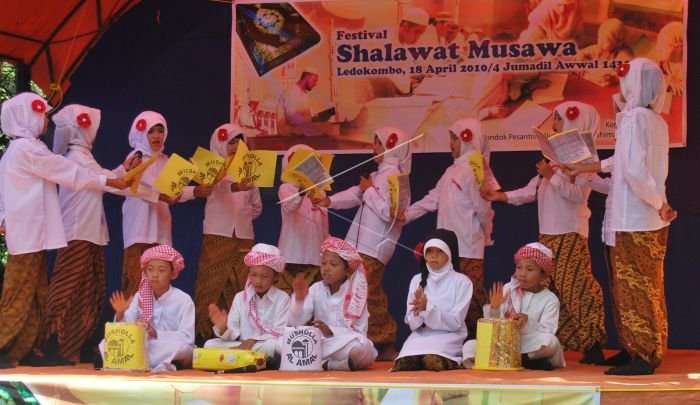
Indonesian children performing the Shalawat Musawah. Source:
https://swararahima.com/2018/09/03/gerakan-shalawat-musawa-pengalaman-dari-ledokombo-jember/
In Indonesia, the world’s most populous Muslim nation, Shalawat is more than just a religious chant. It’s the very pulse of our Pesantren1 culture and the rhythmic soundtrack of our daily lives.
Shalawat is a form of invocation or prayer offered by Muslims to honor Prophet Muhammad (PBUH), serving as a profound expression of love, gratitude, and spiritual devotion. In Indonesia, it transcends simple recitation, often evolving into vibrant communal gatherings filled with rhythmic chanting and music that strengthen social bonds and seek divine blessings. By practicing Shalawat, believers aim to gain peace of mind, find inspiration from the Prophet, and hope for his intercession in the afterlife.
As a form of acculturation, Shalawat has always been an incredibly effective way to weave Islamic teachings into the local soul. It is the bridge between the sacred texts of the Middle East and the humid, tropical reality of the Indonesian archipelago. It is a “social glue” that has stuck through generations.
However, in recent times we observe how the power of culture can be rightfully utilized to fight for a cause, more pressing battles as well. Faqihuddin Abdul Kodir2 and the Indonesian Women’s Ulama Congress (KUPI)3 realized that if Shalawat can build love and devotion, it can also be a formidable tool to dismantle discrimination. They’ve turned this Indonesian tradition into a strong tool against gender-based violence through something called Shalawat Musawah.
Meeting Shalawat Musawah: From “We Shall Overcome” to the Surau4
Shalawat Musawa (The Equality Prayer) is a devotional chant dedicated to Prophet Muhammad (PBUH), specifically composed to highlight Islamic teachings on gender justice and the reciprocal rights and obligations between men and women.
The story behind Shalawat Musawah is a fascinating journey of spiritual and social transformation. Its first stanza uses a phrase every Indonesian Muslim knows by heart—the Shalaatullaah Salaamullaah5 melody that rings from thousands of Suraus in the quiet moments before the call to prayer. It’s a familiar, comforting sound. But the rest of the verses were born out of a specific, high-tension moment of need in 2001.
It was during a teacher training session in Jember, East Java, organized by the Rahima foundation6. The participants, mostly educators from local Pesantrens, were inspired by the legendary American civil rights anthem, “We Shall Overcome.” They felt the raw power of the song to unite a movement and provide a sense of resilience in the face of oppression. However, as people deeply rooted in the Pesantren tradition, they longed for something that echoed their own identity, something Islamic, in Arabic, yet carried that same revolutionary spirit.
Faqihuddin Abdul Kodir, a scholar known for his progressive views on gender, answered this call. He didn’t just write a song; he scribed a manifesto in the form of a prayer. After the text was validated (tashhih) by respected senior scholars like KH Muhyiddin Abdussamad and Kyai Husein Muhammad7, it was first performed by Nyai Hj. Ruqayah Ma’shum8. Her voice marked the beginning of a new tradition where the aesthetic of the Pesantren absorbed the ethos of gender justice.
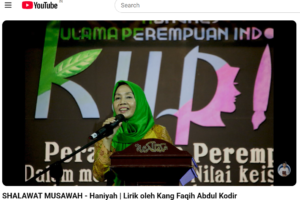
A video on Shalawat Musawah. Source: https://www.youtube.com/watch?v=fHZD0Ld9QS0
Initially, the song was an untitled “Gender Shalawat” or “Justice Shalawat.” But as it traveled from Rahima’s workshops to the recording studios of Fahmina9, specifically the 2003 “Ibnatul Islam” album performed by the Passkhas Kanjeng Sunan group10, it gained its definitive name: Shalawat Musawah (The Shalawat of Equality). By 2017, it reached a historic milestone when it was officially adopted as the anthem for the KUPI congress in Cirebon. This was a massive shift and proved that the female voice in Indonesia is no longer just a “supporting act” in the background; it is leading the melody of social reform.
Breaking the Silence: Challenging Religion as a Tool of Violence
Despite our deep spiritual roots, we are seeing a recurring disturbing phenomenon in Indonesia. Religion is being wrongly weaponized. It’s being used as a tool to perpetuate violence against women or, at the very least, to maintain a deafening, complicit silence in the face of injustice.
One cannot ignore the heartbreaking cases of sexual abuse that have surfaced within some religious institutions11. In these spaces, the perpetrator often hides behind “religious legitimation.” They twist the sacred concept of sami’na wa atha’na (we hear and we obey), which is meant for spiritual guidance, into a tool of absolute control to silence victims and shield their crimes. When a teacher uses their religious authority to violate a student, they aren’t just committing a crime; they are committing a form of spiritual “Daulat” theft—robbing the individual of their sovereign right to safety and dignity.
When patriarchal interpretations of sacred texts are wrongfully used to justify domestic violence or to keep women in a state of permanent subordination, religion starts to seem as a cage rather than a sanctuary.
Shalawat Musawah acts as a direct, vocal act of “De-legitimation.” It’s a loud, melodic protest against this misuse of faith. By chanting for equality in the same breath as they praise the Prophet, the activists of KUPI are sending a clear message: You cannot claim to love the Prophet while abusing those he sought to protect. It is an assertion of sovereignty, reminding every santri12, every woman, and every leader that dignity is a divine mandate that no human authority can override.
The Humanity in the Chant: Reciprocity Over Hierarchy
Today, Shalawat comes in all kinds of genres—from traditional rebana13 to modern pop remixes on YouTube. But while most Shalawat focus on the noble character and personal miracles of Prophet Muhammad (PBUH), Shalawat Musawah digs deeper into a dimension of his life that is often conveniently overlooked: his absolute respect for the human dignity of women.
The Prophet’s legacy isn’t about rigid hierarchy or the dichotomy of “who is above whom.” It’s about synergy. This is the heart of the Mubadalah (reciprocity) perspective in the Shalawat. It shifts our entire religious worldview from a “master and servant” dynamic to a partnership of equals. The poetry of this Shalawat demands a relationship grounded in three core pillars:
- Dignity (Karama): Treating every individual, regardless of gender, as a sacred being created by God.
- Justice (‘Adalah): Ensuring that fairness isn’t just an abstract concept for the public square, but the very air we breathe inside our own households.
- Maslahat: Seeking the common good and actively preventing harm (mudharat) in every social interaction.
By chanting these values in a repetitive, meditative way, the community is practicing a form of “Spiritual Re-programming”, using a traditional medium to fight an old bias. Through Shalawat Musawah, the struggle for equality is no longer seen as a foreign “Western” or “secular” import that threatens our culture. Instead, it is reclaimed as an indigenous Islamic value. This for many is the ultimate expression of cultural resilience. It shows that we don’t have to choose between being progressive and being religious. We can use our most traditional tools to build our most dignified future.
A Resilient Future for the Ummah
As Indonesia holds the mantle of the world’s largest Muslim population, while being a secular state, what happens here also resonates globally. Shalawat Musawah is a story of how a community can face its own limitations and respond not with anger, but with a progressive and inclusive art form, like the Shalawat Musawah.
When we sing these verses as Indonesians, we are joining a global struggle for dignity. It is our version of “Jai Bhim”—a cry for the recognition of the marginalized. It is our “Salaam”—a true peace that can only exist when there is no more oppression. This is the history we are writing today: a history where the sound of prayer is also the sound of liberation.
The Lyrics of Shalawat Musawah
(A Translation for the Global Reader)
Stanza 1
Shalli wa sallim daa’iman ‘ala ahmada
Wal aali wal ash-haabi man qad wahhada
(O Allah, bless and grant peace to the Praised One [Muhammad] forever / And upon his family and companions, and all who proclaim the Oneness of God)
Stanza 2
Huwa khalaqahumaa min nafsiw wahidah
Fa bats-tsa minhumaa rijaalaw wan-nisa
(He created both [man and woman] from a single soul / And from the two, He brought forth the multitude of men and women)
Stanza 3
Innahuu lan na’ish hayaatan thoyyibah
Illa bi juhdinaa rijaalaw wan-nisa
(Truly, we shall never experience a prosperous life / Without the collective effort of both—men and women)
Stanza 4
Innahu lan nash-had hayaatan ‘aadilah
Illa bi ‘adlinaa rijaalaw wan-nisa
(Truly, we shall never witness a life of justice / Without ensuring justice for both—men and women)
Footnotes:
- A pesantren is a traditional Islamic boarding school in Indonesia where students live together to study the Quran, Arabic, and religious sciences under the guidance of a spiritual leader known as a kyai
- Faqihuddin Abdul Kodir is a prominent Indonesian Islamic scholar and activist known for his pioneering work in gender-equal interpretations of Islamic jurisprudence (fiqh). He is best known for developing the Mubadalah (reciprocity) perspective, which promotes the idea that Islamic teachings should be interpreted as being equally applicable to both men and women, emphasizing partnership rather than hierarchy.
- The Indonesian Women’s Ulema Congress (KUPI) is a movement aimed at realizing a vision of gender justice and balanced relations between men and women within an Islamic perspective and through the collective efforts of the Indonesian Muslim community.
- Surau refers to a traditional Islamic educational and communal institution in West Sumatra, serving as a place for worship, religious study, and a social hub for Muslims.
- Meaning: God’s grace and God’s peace be upon the Messenger of Allah. God’s grace and God’s peace be upon the Beloved of Allah
- Rahima is a Non-Governmental Organization (NGO) primarily focused on the advancement of women’s rights through an Islamic perspective. ( https://swararahima.com/ )
- KH. Husein Muhammad, affectionately known as Buya Husein, is a prominent figure actively campaigning for gender equality messages within Islam. In the Indonesian Women’s Ulema Congress (KUPI), Buya Husein is a key figure with close ties to the three organizing bodies of KUPI: Rahima, Fahmina, and Alimat
- Nyai (female leader) of Pondok Pesantren Al-Ma’shumy which she founded in 2004, is actively involved in the public sphere through preaching and teaching, as well as advocating for women and children who are victims of violence
- The Fahmina Foundation operates in the fields of religious studies, social research, and the strengthening of civil society.
- A youth mosque music group from Indramayu Regency, West Java
- https://komnasperempuan.go.id/siaran-pers-detail/siaran-pers-komnas-perempuan-memastikan-ketidakberulangan-kekerasan-seksual-di-lembaga-pendidikan-pesantren
- In the Indonesian Islamic tradition, a santri is a student who resides in a pesantren (boarding school) to study the Quran, Islamic law (fiqh), Arabic language, and various religious sciences
- A rebana is a traditional Islamic frame drum, widely used in Southeast Asia—particularly Indonesia, Malaysia, and Brunei—to accompany devotional music, such as sholawat, hadroh, and marawis.
(The views expressed in this article are the author’s own. Content can be used with due credit to the author and to ‘Zariya: Women’s Alliance for Dignity and Equality’)
About the Author
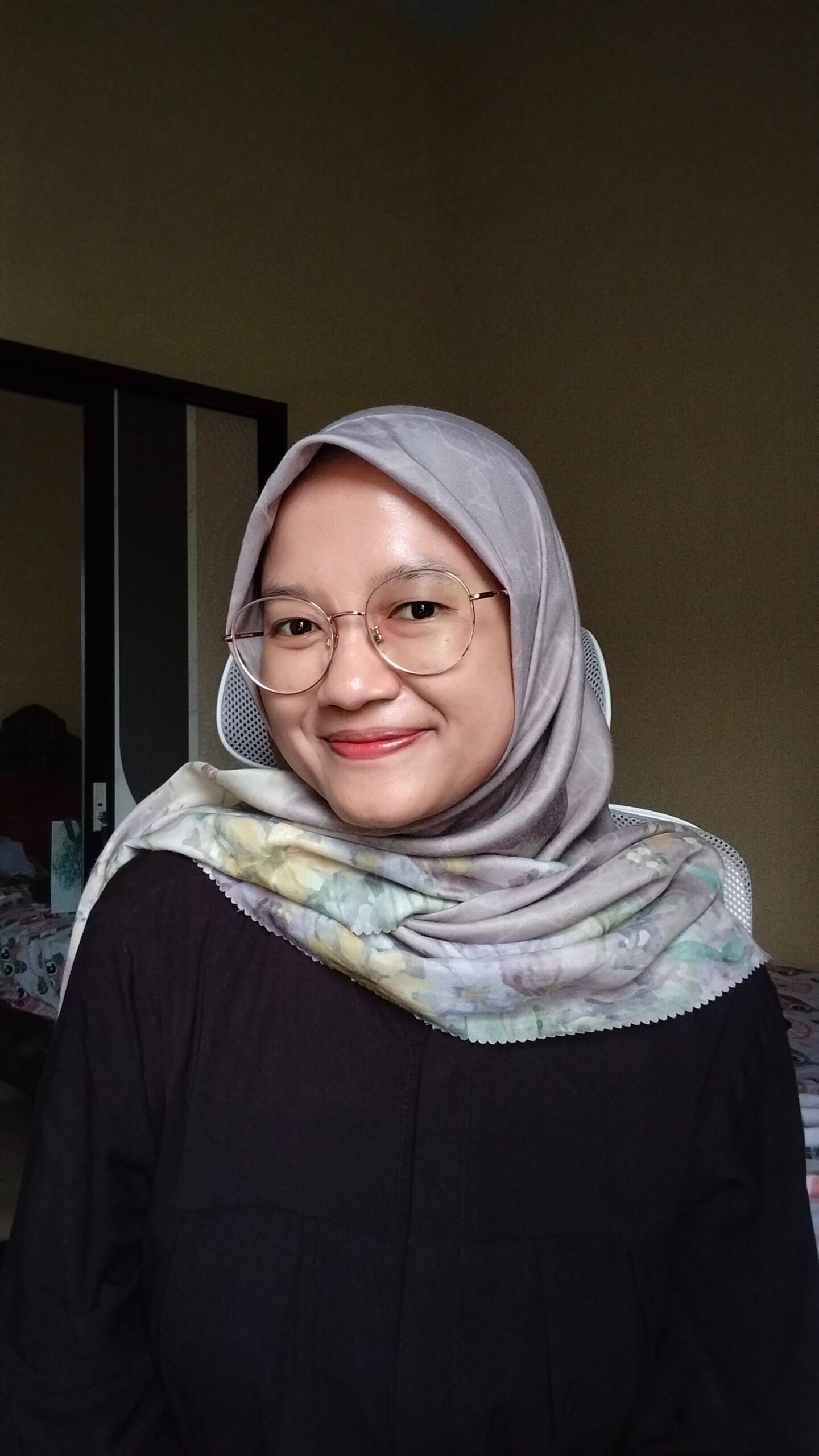
Adzka Haniina Albarri is an Indonesian writer who believes that writing is a powerful medium for storytelling and advocacy, focusing on diversity, peace, social justice, gender, and environmental issues. Since 2016, Adzka has been actively involved in writing and literacy initiatives across student journalism, community projects, and NGOs. Her essays have been published in three anthologies: Reksa Budaya Ponorogo (Almillah, 2020), Merdeka dari Kekerasan (Yayasan JaRI, 2022), and Perempuan-Perempuan Penggerak Perdamaian (JISRA, 2024)